Last updated: October 2026 | SeaMoneyTips
Choosing a Singapore mobile plan used to be a two-year decision. You walked into a telco store, picked a phone, signed a contract, and the handset subsidy was folded into the monthly fee. That model still exists, but it is no longer where the value sits. In the wider context of Singapore cost of living, the mobile bill is one of the few line items a household can cut without touching housing or transport. The cheapest plans in 2026 come from operators most people had never heard of five years ago, and the price gap between the best and worst plan is now larger than the gap between 4G and 5G.
This guide compares what is actually on the market, shows representative prices for light, heavy and senior users, works through the real cost of a contract versus buying your phone outright, and lists the specific things that go wrong when people switch. Every price below is a published recurring or promotional rate as of October 2026, and promotions change without notice.
What Is a SIM-Only Plan and How Does It Differ From a Contract Plan?
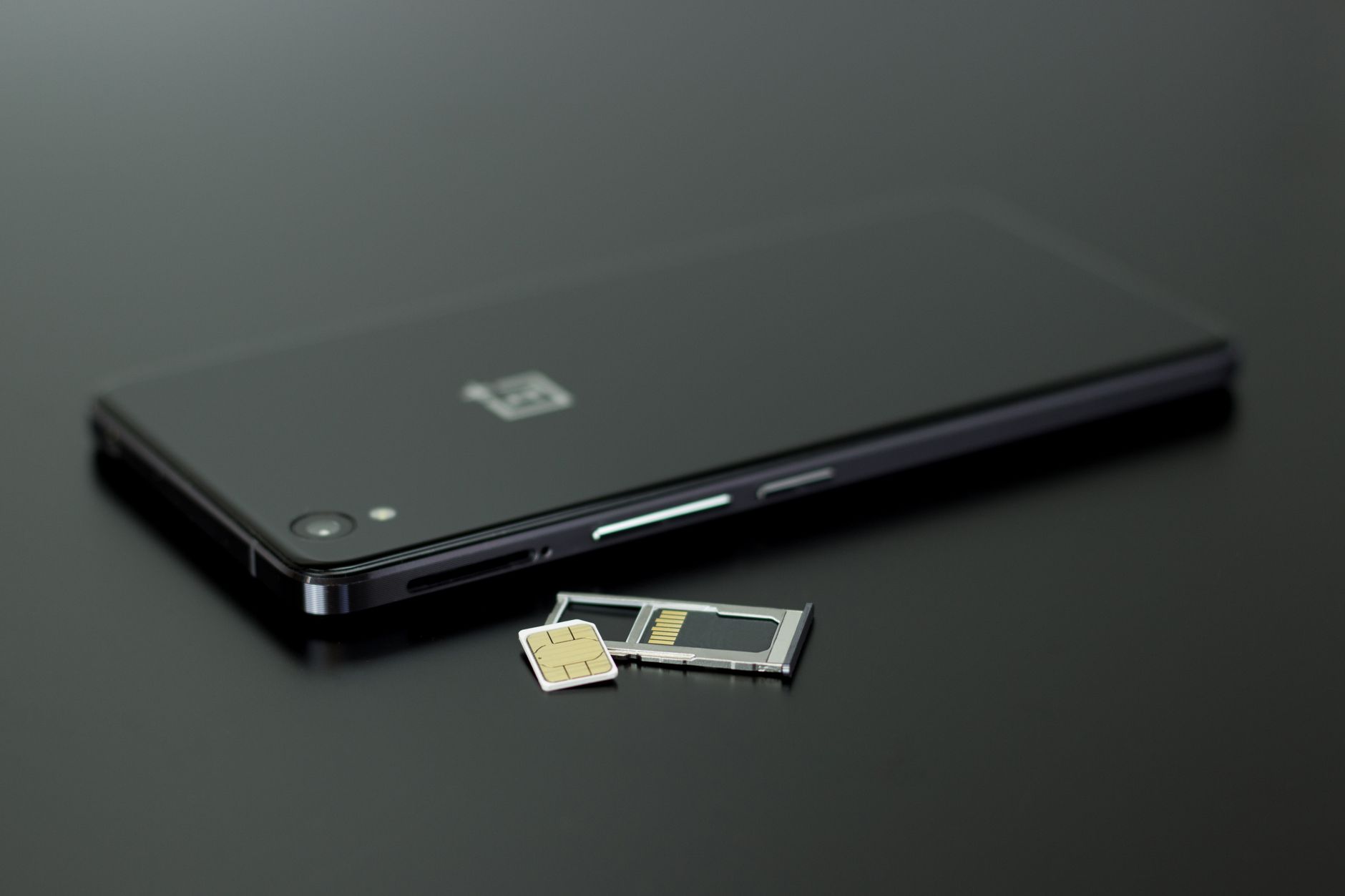
A SIM-only plan gives you data, talktime and SMS for a fixed monthly fee and nothing else. There is no handset in the package, so there is no subsidy to recover and usually no minimum contract period. You can move to another provider when a better offer appears.
A contract plan works the opposite way. The telco sells you a phone below retail price and recovers the difference across 24 months of subscription. The monthly fee therefore contains two things: the service, and an instalment on the handset. That structure creates a trap most people do not notice. If you do not recontract the moment your 24 months end, you keep paying the same monthly fee even though the handset instalment has already been recovered. The phone is paid off, but the bill is not.
The flexibility argument cuts both ways. Switching providers means waiting for a physical SIM to arrive, and number porting can cause a short service disruption even when everything is done correctly. Providers that support eSIM remove the wait for the card itself, but the number transfer still has to be processed on the network side.
Singapore Mobile Plan Prices in 2026: What the Market Actually Looks Like
The market is no longer Singtel, StarHub and M1 with a few small resellers on the side. The three major telcos still operate their own SIM-only lines, but mobile virtual network operators now publish the most aggressive prices. These MVNOs do not build networks. They buy capacity from one of the three and resell it under their own brand, which is why an eight plan runs on StarHub infrastructure and a Zero1 plan runs on Singtel infrastructure.
The table below shows representative plans across the price range. It is not a complete list. It is a sample chosen to show what each price band buys in 2026.
| Provider | Plan | Monthly | Data | Network | Contract |
|---|---|---|---|---|---|
| Zero1 | Starter Prime 4G | S$7.06 | 200GB | Singtel | None |
| CMLink SG | Roam Value | S$7.70 | 200GB | 4G and 5G | None |
| VIVIFI | Roam Value 4G | S$7.70 | 200GB | 4G | None |
| SIMBA | SuperRoam 10 | S$10.00 | 500GB | SIMBA 5G | None |
| eight | Power Eight 5G | S$10.80 | 588GB | StarHub 4G | None |
| Singtel hi! | 5G+ Monthly | S$15.00 | 500GB | Singtel 5G | None |
| M1 | Heavy use plan | S$17.95 | 1,000GB | M1 | None |
Swipe the table sideways to see all columns.
Three things stand out from that table. First, the floor is very low. A 200GB plan can be had for around S$7, which was unthinkable when 6GB cost S$40. Second, the data allowances are now so large that for most users the allowance has stopped being the deciding factor. Someone who streams video every day will struggle to consume 200GB on a phone. Third, the price ceiling for heavy users is still under S$20, which means the entire rational decision space is narrow.
5G coverage is no longer a differentiator either. Singapore built out 5G standalone coverage to more than 99 percent of the island, so the question is not whether 5G exists where you live, but whether the specific plan you are buying gives you uncapped 5G access or a capped slice of it. Several cheap plans advertise 5G but throttle the speed after a certain volume or restrict you to a trial window.
The Cheapest Singapore Mobile Plan Options in 2026
Zero1 Starter Prime 4G at S$7.06
This is one of the strongest entry points in the market. For S$7.06 a month you get 200GB, 300 minutes of talktime, 100 SMS, and 100GB of roaming data for Malaysia valid for 365 days. It also includes a three-month 5G trial, free caller ID and free incoming calls and SMS. The plan runs on the Singtel network, which matters for coverage in older buildings and the MRT tunnels.
The catch is that the 5G is a trial rather than a permanent inclusion, so after three months you fall back to 4G on the same allowance. For most users that is fine. 4G on a modern handset handles video streaming without visible problems.
Promotional prices you should not anchor on
Some listings show numbers that look impossibly low. One 500GB plan has been advertised at S$0.90 against a list price of S$19.90. That is a first-period acquisition offer, not the recurring rate. It is a legitimate way to save money if you know what you are signing up for, but it is not a fair basis for comparing plans, because the price changes after the promotional window closes. When you compare Singapore mobile plan options, always record the recurring price next to the promotional one.
Senior plans at S$5.00
Several providers run senior tiers at S$5.00 a month with large data allowances in the 500GB range and IDD minutes bundled in. These are genuinely good value, but they are age-gated. If the account holder does not meet the eligibility rules, the plan cannot be activated, and providers do audit this.
Best Singapore Mobile Plan by User Type
Light users who mostly stay on Wi-Fi
If you spend most of the day on office or home Wi-Fi, the data allowance is irrelevant and the decision reduces to price and coverage. If cash flow is tight, check whether you qualify for Assurance Package payouts before trimming other budget lines. Take the cheapest plan on the network that works in the places you actually go. Paying S$17.95 for 1,000GB you will never touch is the most common waste in this category.
Heavy users and people who tether
If you use your phone as a hotspot for a laptop, or you commute with video running for two hours a day, the allowance starts to matter. Plans in the 500GB to 1,000GB range at S$10 to S$18 cover this comfortably. The variable to watch is not the headline allowance but the speed after the cap and whether tethering is permitted at full speed.
Seniors who call overseas
For this group the data allowance is almost beside the point, in the same way that student care fees dwarf the phone bill in a family budget. What matters is IDD minutes, free incoming calls, and a large-screen phone that is easy to read. Several S$5 to S$6 senior plans bundle over 100 IDD minutes to 20 or more countries, which beats adding an IDD add-on to a cheap plan.
Frequent travellers to Malaysia
Malaysia roaming is now a legitimate selection criterion. Some plans bundle 100GB of Malaysia roaming valid for a full year, others throw in a separate regional bucket. If you cross the border monthly for work, that inclusion can be worth more than a S$5 monthly price difference. Read the validity period carefully. A 100GB roaming allowance that expires in 30 days is worth far less than the same volume valid for 365.
SIM-Only Versus Contract: Working Out the Real Cost
Take a typical two-year contract at S$45 a month with a phone that retails at S$1,000 but is sold to you at S$400. Over 24 months the contract costs S$1,080, and you received S$600 of handset discount. Your effective service cost is S$480, or S$20 a month.
Now compare a SIM-only path. You pay S$10 a month for service, which is S$240 over 24 months, and you buy the same phone outright at S$1,000. Total is S$1,240 against S$1,080 for the contract. The contract wins by S$160 across two years, which works out to about S$6.67 a month. That is the entire advantage a contract offers, and it only exists if you actually want that specific handset at that specific moment.
The picture flips completely if you stay on the contract past month 24 without recontracting. You continue paying S$45 a month, but there is no handset instalment left inside that fee. Over the following 24 months that is S$1,080 for service that a S$10 SIM-only plan delivers for S$240. The difference is S$840, and it is pure loss. That money, moved into a cash management account, would earn interest instead of funding an expired subsidy. This is the single most expensive mistake in the Singapore mobile plan market, and it happens silently because nothing in the billing changes when the contract ends.
What to Check Before You Switch
Identify the network owner, not the brand
Every MVNO rides on one of the three physical networks. Before you commit, find out which one, then ask whether that network performs well in the places you use your phone most: your flat, your office, the MRT line you take, and any basement car park you frequent. Coverage maps published by the brand are marketing material. Coverage maps published by the underlying network owner are closer to reality.
Confirm eSIM support and porting expectations
eSIM support is not universal across the cheap tier. Some S$7 plans support it, others require a physical card. If you travel and rely on a second eSIM for a local data plan abroad, this detail decides whether the plan works for you. Porting your existing number is a separate process from activating the SIM, and it takes time regardless of form factor.
Read the roaming terms literally
Roaming inclusions are where the marketing language does the most work. Look for three things: the volume, the destination list, and the validity period. A plan that bundles 100GB of Malaysia roaming for 365 days is a different product from one that bundles 6GB usable across a handful of countries for 30 days, even when both are described as free roaming.
Marketing Traps in Singapore Mobile Plan Advertising
Introductory pricing presented as the price. The S$0.90 headline is an acquisition offer. The recurring rate is the number that belongs in your budget.
Unlimited data that is not unlimited. Many plans advertise unlimited data and then apply a speed cap after the high-speed allowance is consumed. The connection stays alive but slows to a level where video will not play. Read the fair usage section, not the headline.
Rollover allowances that expire. Data rollover is a real benefit, but it is usually capped at one or two billing cycles. An accumulated balance that disappears after 60 days is not a savings account.
Provider risk at the MVNO tier. redONE Mobile terminated its Singapore subscriber lines from 12 September 2026 and directed customers to move to eight. Customers were not left without service, but they were moved without choosing to move. When you pick a small MVNO for a S$3 monthly saving, you are accepting that this can happen to you.
Common Questions About Singapore Mobile Plans
Is SIM-only always cheaper than a contract plan?
No. If you want a new flagship phone and you would buy it anyway, a contract can be marginally cheaper across the two years. SIM-only is cheaper in every other scenario, and dramatically cheaper if you would otherwise drift past the end of a contract without recontracting.
Can I keep my existing number?
Yes. Number porting is standard across all providers. The process requires your current line to be active and not locked to another contract. Expect a short window where the number is being transferred and service may be interrupted.
Do I need a 5G plan in 2026?
Coverage is above 99 percent, so 5G is available almost everywhere. Whether you need it depends on what you do. For messaging, maps, and standard video, 4G is sufficient and the cheaper plans are better value. For tethering a laptop or large file transfers, uncapped 5G access is worth paying for.
What happens if my MVNO shuts down?
Historically, the regulator and the host network have arranged migration rather than abrupt disconnection, as the redONE case shows. Your number survives. Your plan terms do not. Expect to be moved onto whatever the receiving provider offers, which may not be the price you originally signed up for.
Key Takeaways
- A Singapore mobile plan in 2026 starts below S$10 a month for 200GB, with no contract required.
- The cheapest plans come from MVNOs riding on Singtel, StarHub or M1 networks. Identify the underlying network before you buy.
- Contract plans only win when you genuinely want the bundled handset. Staying on a contract past 24 months without recontracting is the most common and most expensive error.
- Promotional prices like S$0.90 are acquisition offers. Budget on the recurring rate.
- For frequent Malaysia travel, roaming validity period matters more than roaming volume.
Conclusion
The Singapore mobile plan market has become a price comparison exercise with a small number of real variables: which network, how much uncapped 5G, what roaming validity, and whether you want a phone bundled. Everything else is marketing, and the same discipline applies to road tax, where the published formula beats any dealer estimate. Most people should be paying under S$15 a month, and a large number of people are paying more than S$40 because they never left a contract that ended years ago.
Start by checking when your current contract actually ended. That single date is usually worth more than any plan comparison on this page.
Sources
- MobilePlans.sg: Compare SIM Only Plans Singapore
- SingSaver: SIM-Only Plan Comparison by Data Usage Tier
- SingSaver: Best SIM-Only Mobile Plans In Singapore 2026
- MobilePlans.sg: Full SIM-Only Plan Listing by Provider
- M1 Singapore: Official Plan and Pricing Page
This article is for general information only. Plan prices, data allowances and promotional terms change frequently and are set by each provider. Verify the current recurring price and contract terms directly with the provider before signing up.